

Views
Development preview — views-as-plugins and community views are on the unreleased development line (post-1.16.0). The canvas is released behaviour.
⌘E or the Settings ▸ Views overview switches how the workspace is shown. The workspace runtime owns frames, tiles, and sessions; a view only arranges them.
Built-in views
Section titled “Built-in views”- Canvas — infinite board; frames as coloured zones; Layers rail on ⌘L; per-frame Columns / Rows / Grid arrange.
- Windows — one tab per tile; minimized tabs; the active tab follows tile selection
from any source (click, spawn,
hive ctl focus).
Everything else is a plugin you install or write. Nothing beyond these two ships in the box, and neither of them is privileged: they speak the same protocol yours will.
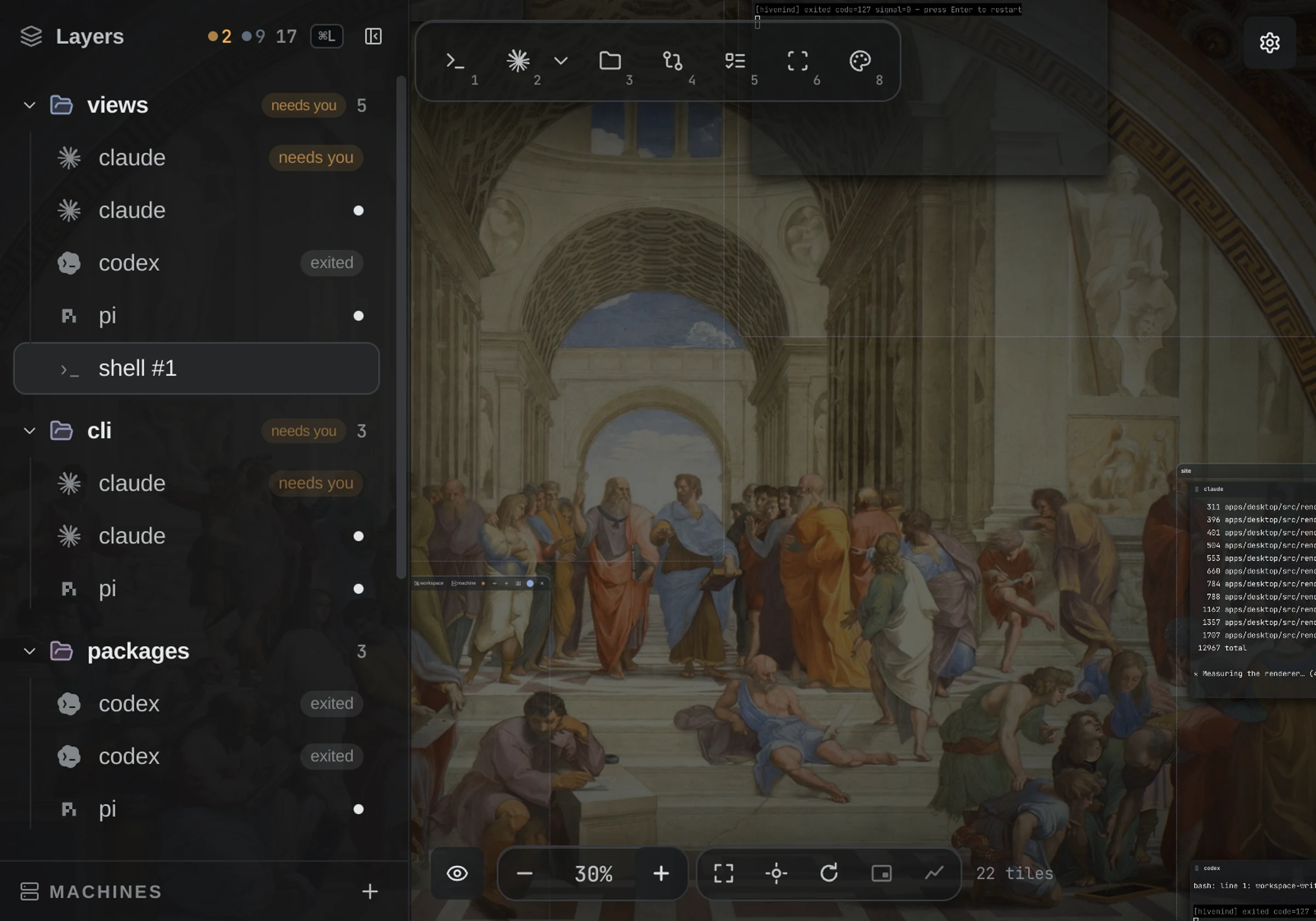
The three example views
Section titled “The three example views”Same workspace, same three agents, three arrangements. Each one was built for a different kind of day.
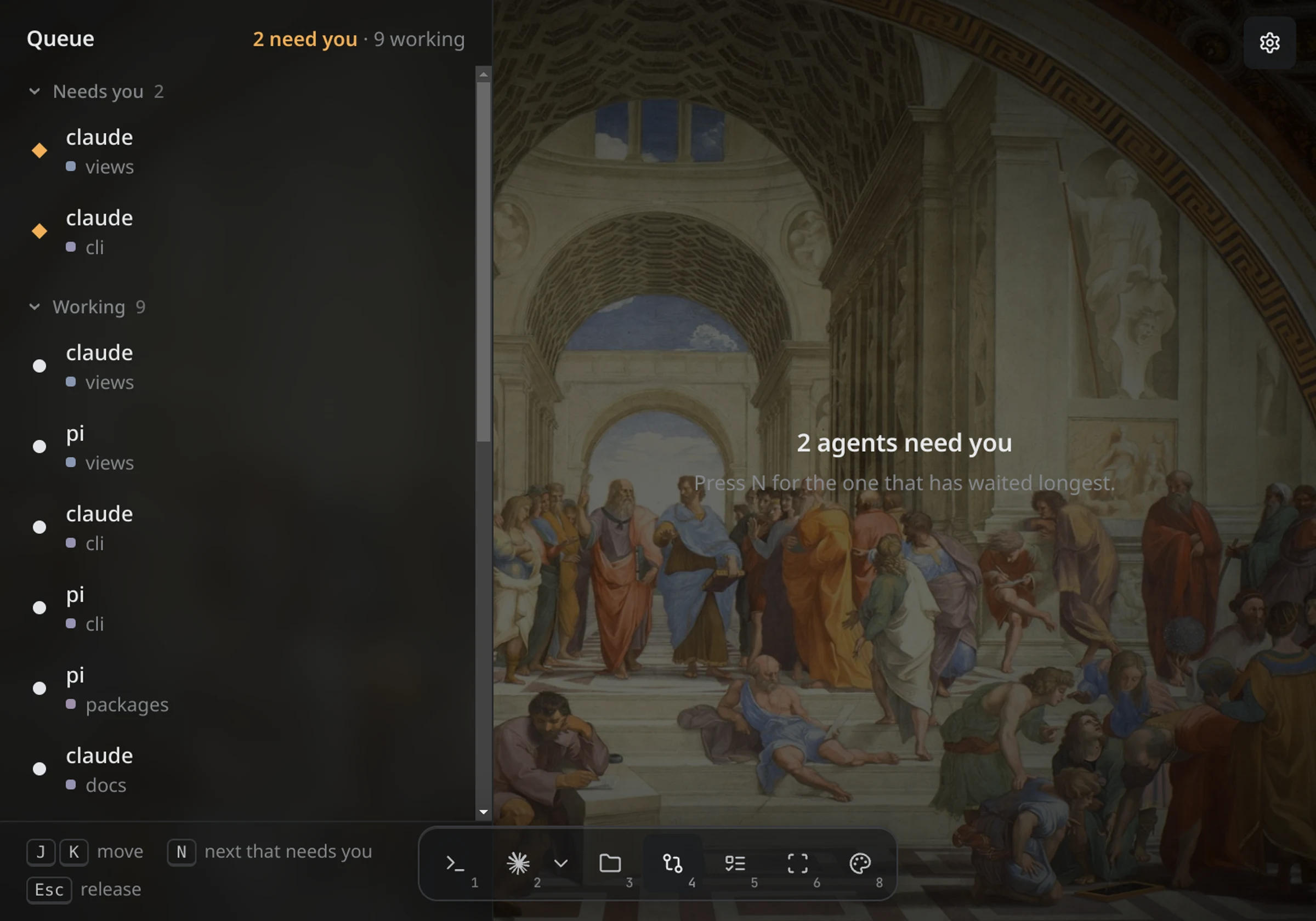
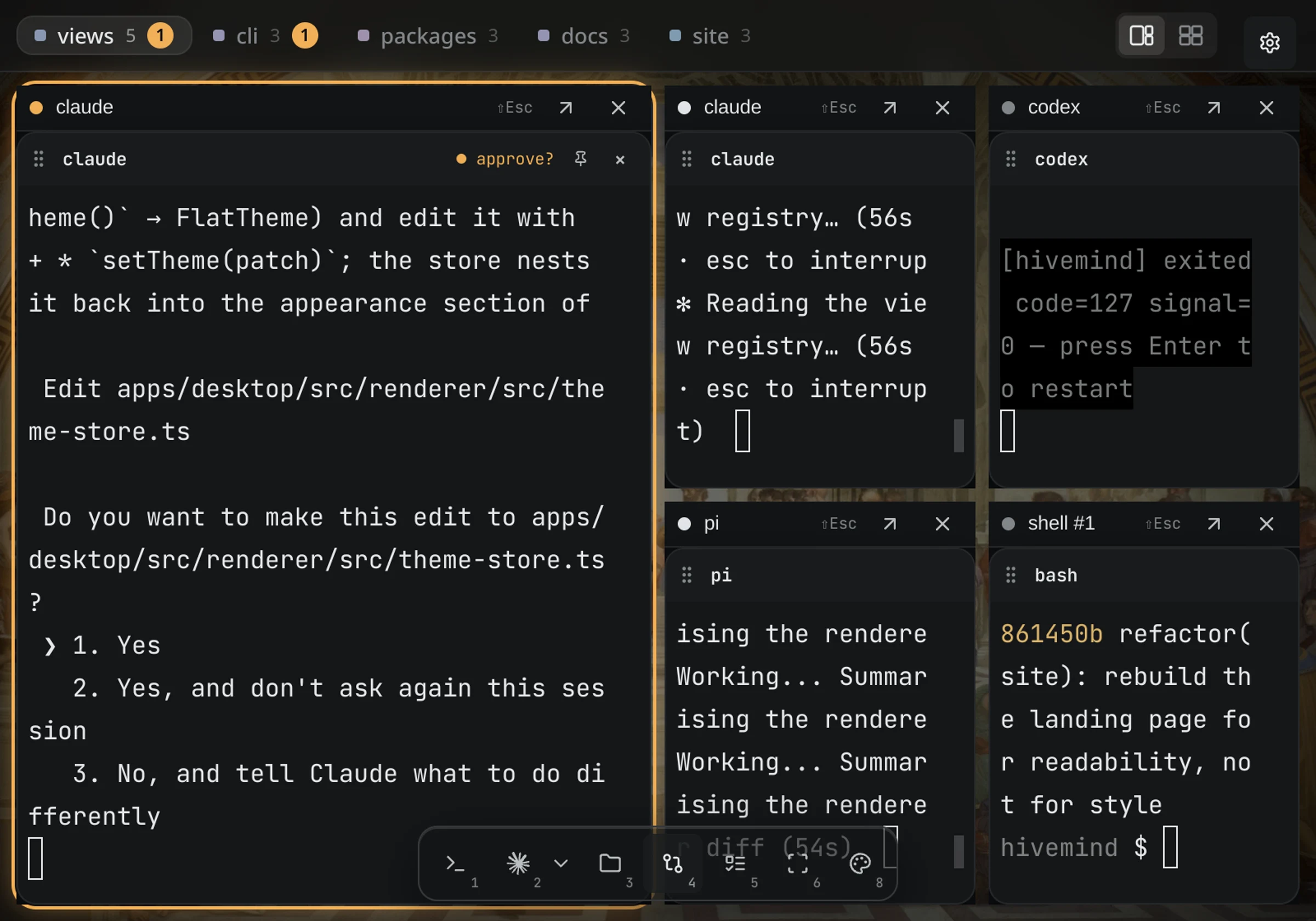
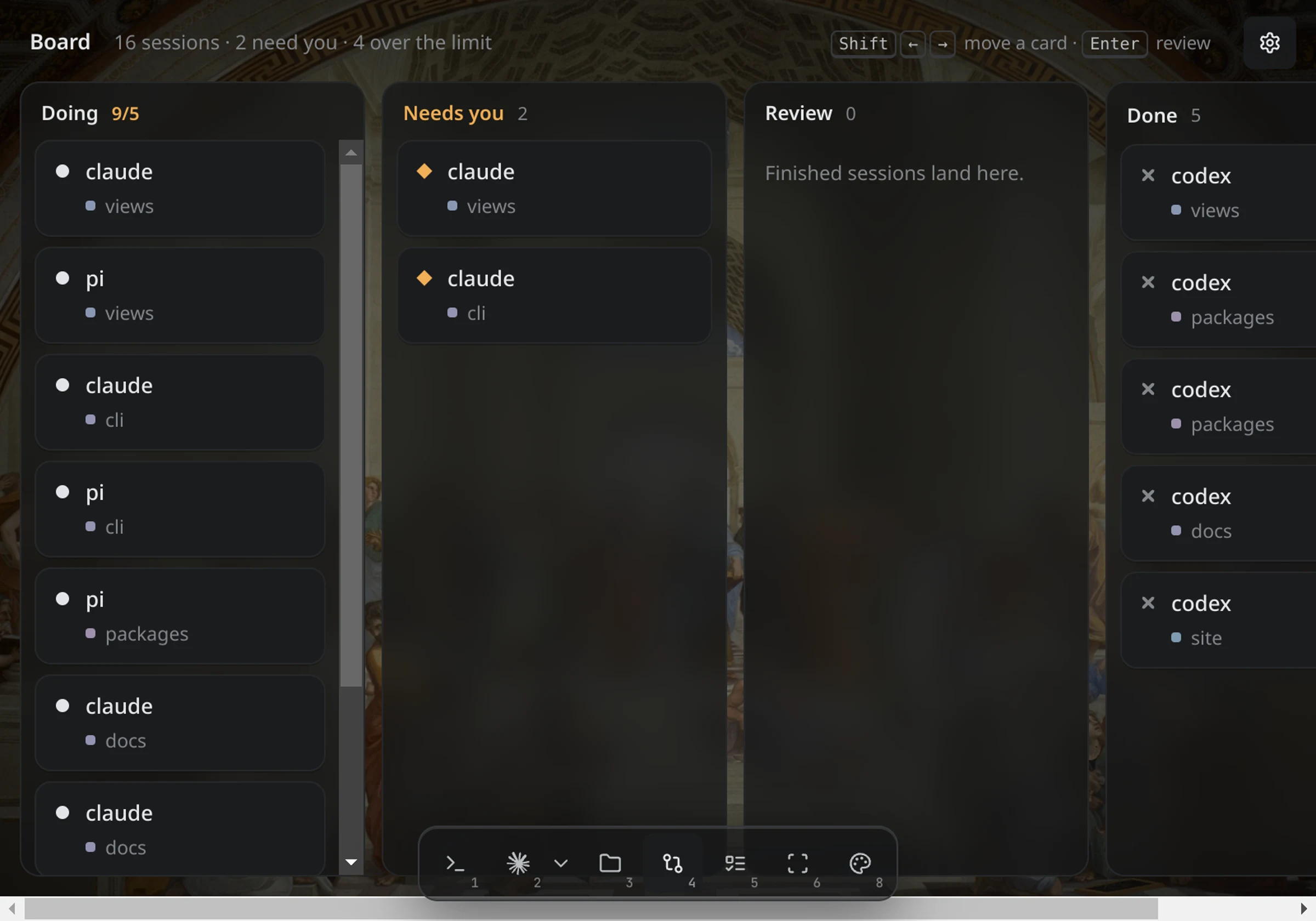
The terminals in those shots are live: a view asks the host for a rectangle, and the host places the real tile there. Nothing is re-rendered or mirrored.
Switch behaviour and limits
Section titled “Switch behaviour and limits”Tile bodies are mounted once by a shared tile host and lent to the active view, so switching preserves local terminal sessions, unsaved editor buffers, and browser tabs. Verified limits:
- A browser tile’s page reloads once per view switch (Chromium re-attaches the moved
<webview>); tabs, address, and history survive; page scroll and form state do not. - Remote PTYs are not affected by switches, but an SSH drop ends them regardless.
- A view that crashes is disabled for the session and you land on the canvas; sessions continue.
Each view keeps a versioned layout per repo; unknown view ids fall back to the canvas.
Community views
Section titled “Community views”Open Settings → Plugins → Installed → Install from folder. Review the package and requested permissions before installing. The same page lets you disable, replace, or remove a view.
A view is a package — hivemind-view.json plus one bundled entry:
hive views install examples/views/queue/disthive views list # what will load, and why nothive views remove queueInstall/remove ask a running app to rescan. Plugins run in a sandboxed iframe on their
own origin: no filesystem, network, node, or app API. They read workspace structure,
names, per-tile status, and selection through the versioned @hivemind/view-sdk
protocol, and can request a surface rect where the host places a real tile (that is how
a live terminal appears inside a plugin scene). Traffic that is malformed, flooded, or
CPU-heavy disables the plugin for the session. Examples in examples/views/, each built for one kind of person:
queue— for running many agents at once: agents ordered by who needs you, the selected one’s live terminal docked beside the list.tiled— for the terminal native: every terminal in a frame laid out as live panes, with frame tabs that light when another task needs you.board— for the lead: sessions as cards moving from doing, to review, to done.
Authoring: Extension authoring.
Chrome in every view
Section titled “Chrome in every view”The workspace toolbar (spawn, frame, browser, appearance, update) draws over the active view — top-centre on canvas, compact elsewhere; its position is configured on each view’s page under Settings ▸ Views. Choose Collapsed to keep a handle or Off to use only your view’s controls. Settings remains accessible in the app header. A docked tile gets a host bar with name, status, pop-out, and undock.
Appearance inside views
Section titled “Appearance inside views”A terminal docked in a community view renders per the pluginSurfaces setting:
theme (as on canvas, wallpaper clipped to the slot) or opaque (solid terminal
background). Set it in Settings ▸ Appearance or
hive config set appearance.pluginSurfaces '"opaque"'.