

Hivemind
Hivemind runs coding-agent CLIs alongside terminals, editors, file trees, and diffs — in one window, on one canvas. Agents work in parallel; the workspace shows you which of them is waiting on you.
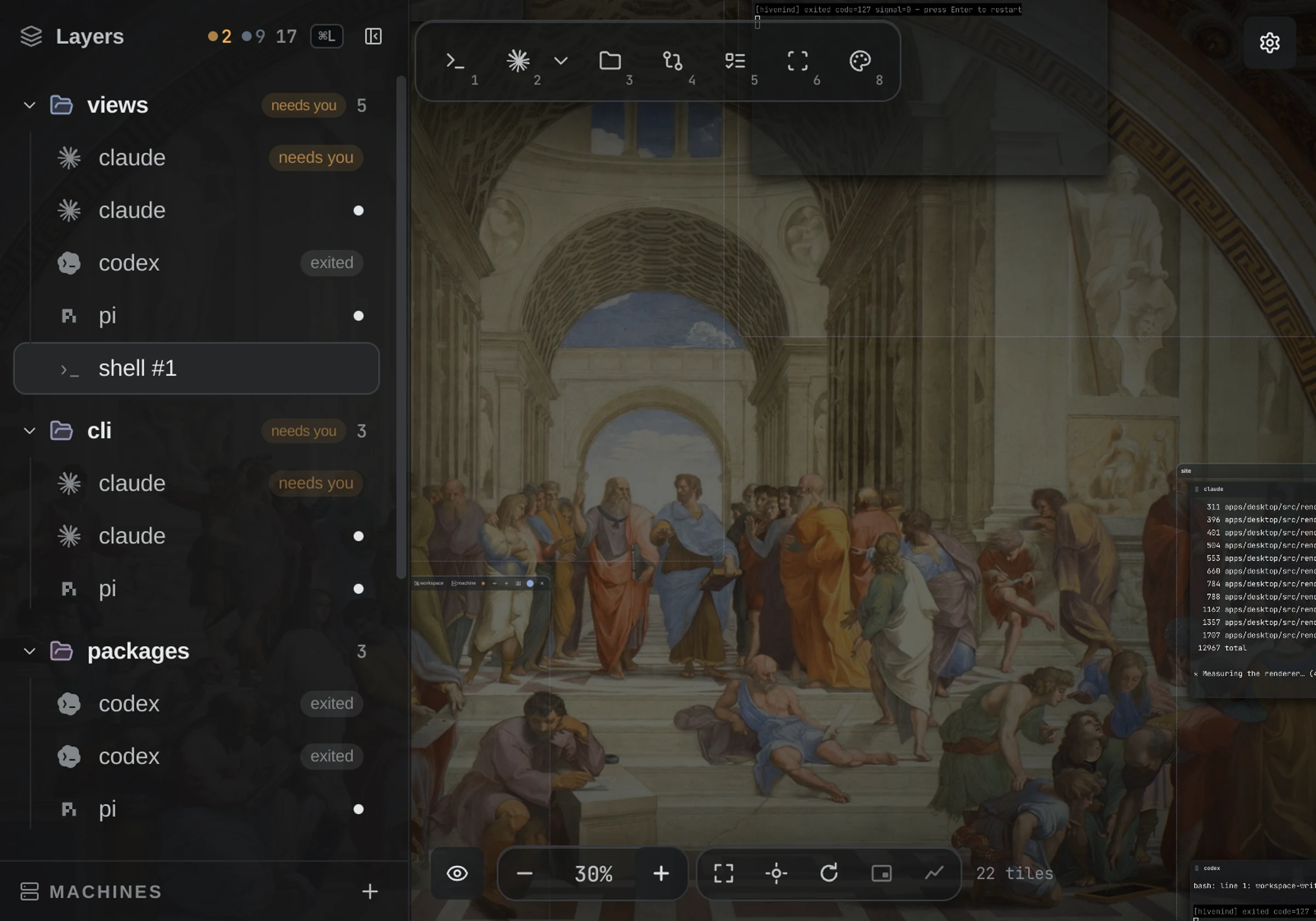
The model, in one picture
Section titled “The model, in one picture”Three nouns. Everything in these docs is one of them.
- Canvas — one per project, saved with the repository.
- Frame — a named zone bound to a directory: a local repo, a git worktree, or an SSH host.
- Tile — one process in that directory: an agent, a shell, an editor, a diff.
What the colours mean
Section titled “What the colours mean”A tile carries a dot, and the dot is the whole notification system. Amber is reserved: it is the only colour that means a human is being waited on.
working needs you done idle
Press N to jump to the next tile that needs you, Esc to release it, and ⌘E to change how the whole workspace is drawn.
Four ways to look at the same work
Section titled “Four ways to look at the same work”The runtime owns frames, tiles and sessions; a view only arranges them. Switching costs nothing and loses nothing.
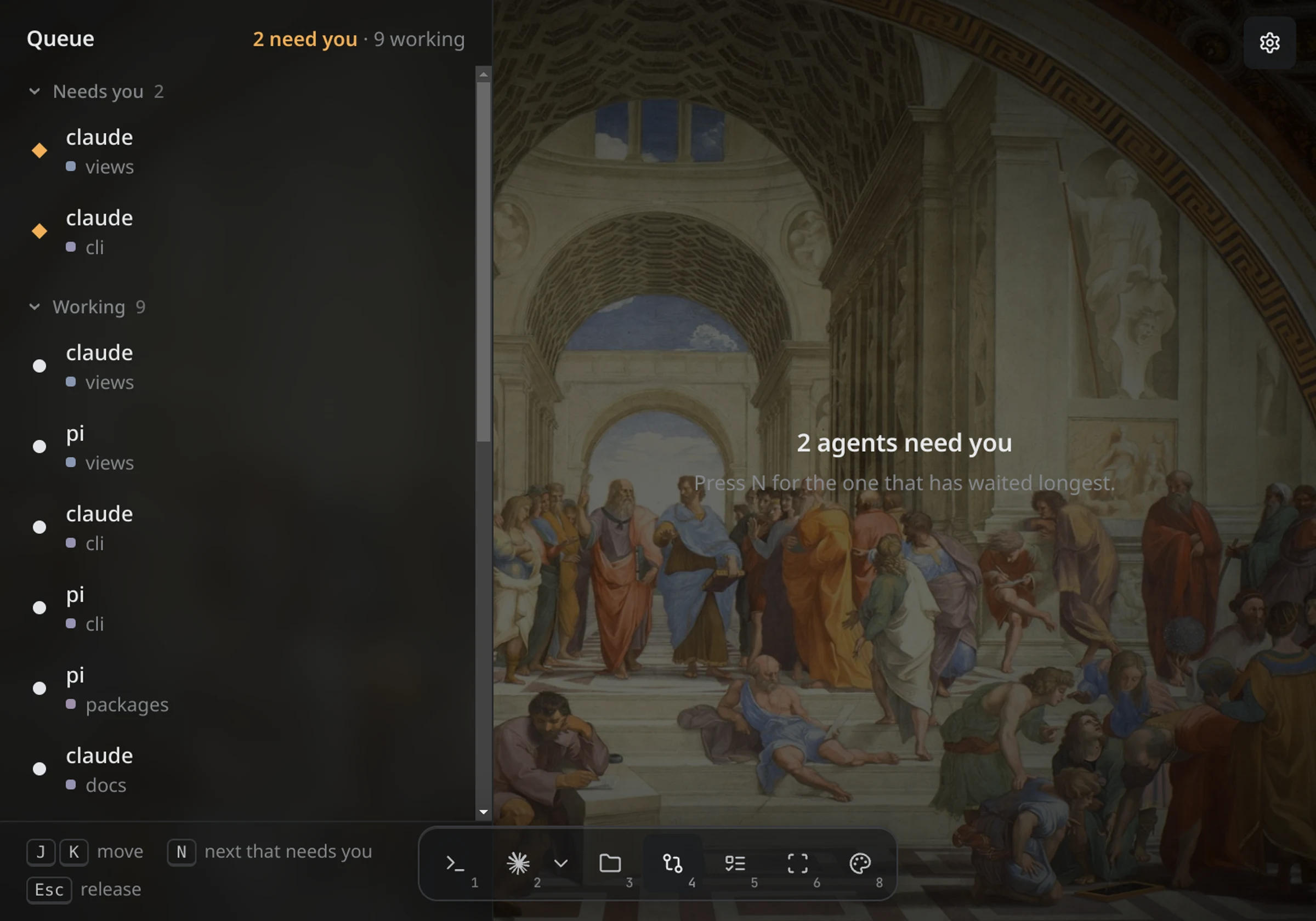
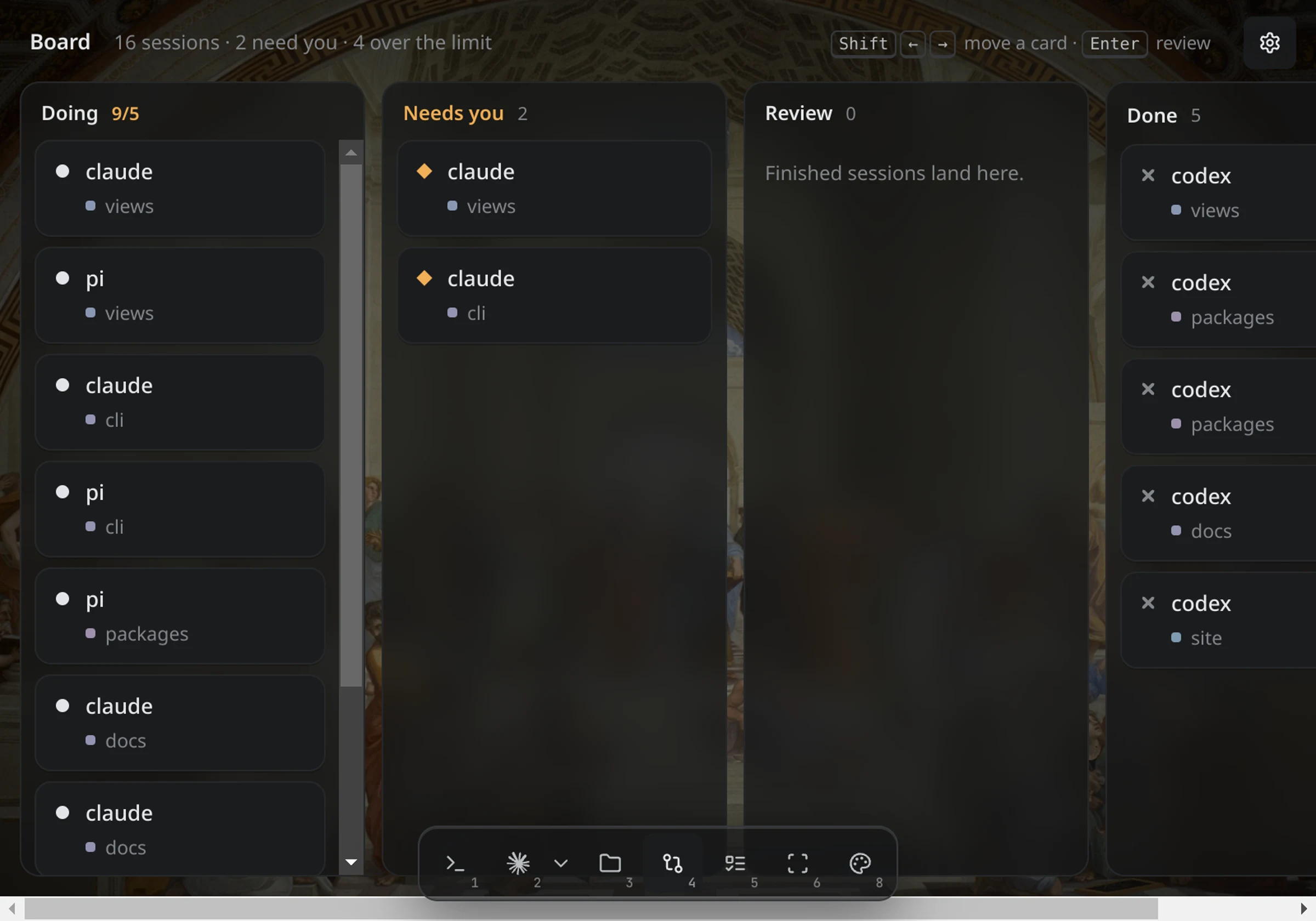
See all four, and write your own →
Start here
Section titled “Start here”- Install and startOne command, then your first frame.
- Run agentsWhat ships in the box and how it is detected.
- Drive them from the CLISpawn, read, approve, without the mouse.
- Write a viewThe same protocol the built-ins use.
These docs follow the development branch. Views, the view SDK, and the new settings commands
are development previews. Check hive --help for what your installed version has.
For coding agents: the documentation index. Every guide is also plain Markdown
under markdown/.